
Financial Insights & Business Tips from Fraction CFO
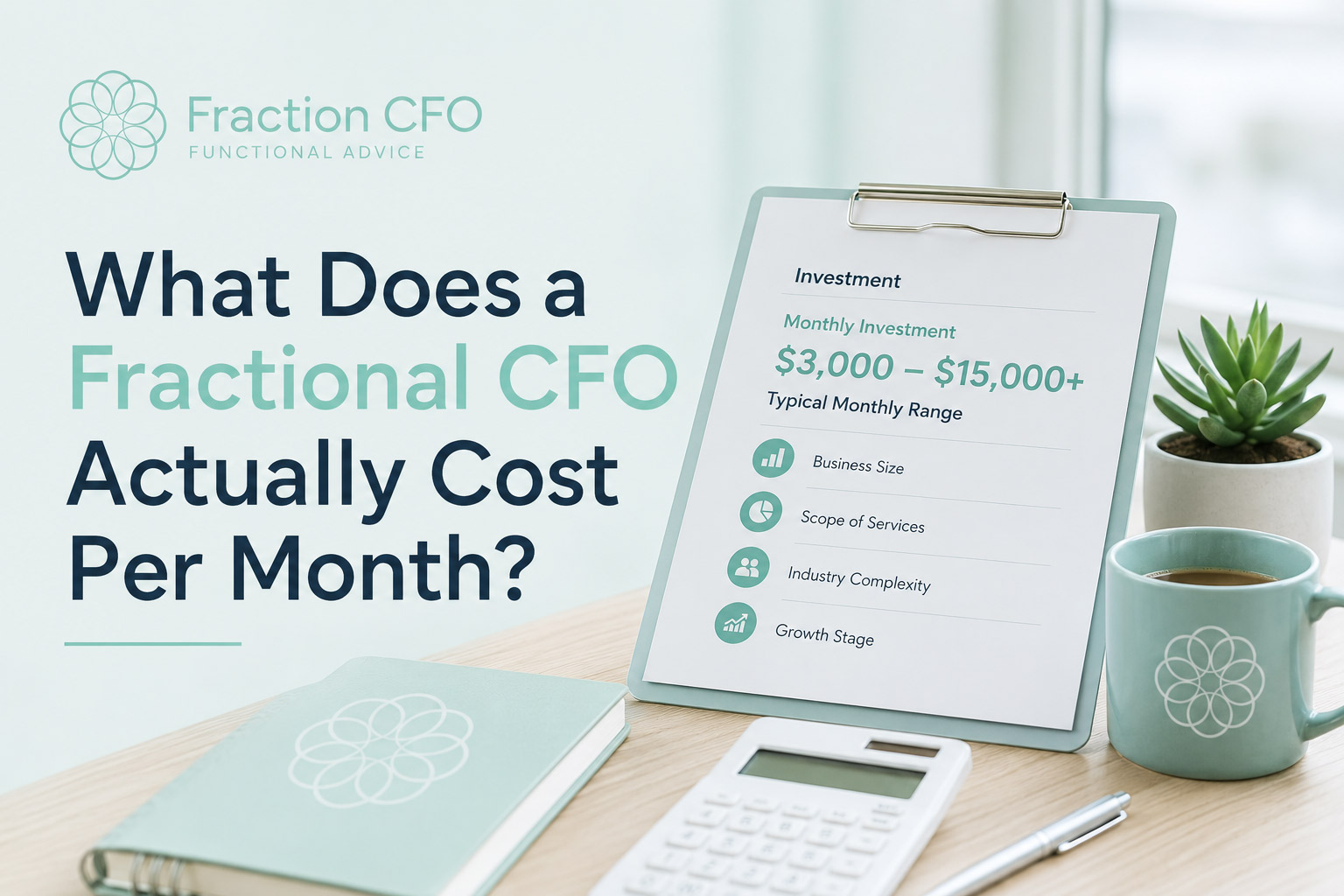
What Does a Fractional CFO Actually Cost Per Month?
Why the Real Answer Is More Useful Than a Single Number
It is one of the first questions business owners ask, and one of the hardest to answer without context. The cost of fractional CFO services varies more than most people expect, and the range is wide enough that a generic number can be genuinely misleading. Whether you are in Denver, Colorado, comparing providers or simply trying to budget responsibly, understanding what drives fractional CFO pricing is more valuable than landing on a figure.
This article breaks down what you can realistically expect to pay, what factors move that number up or down, and how to evaluate whether the investment makes financial sense at your current stage.
The Typical Monthly Range for Fractional CFO Services
Most fractional CFO engagements in the United States fall somewhere between $2,000 and $15,000 per month. That spread reflects genuine differences in scope, seniority, and the complexity of work involved. The table below breaks down how the range typically maps to engagement type and business size.
What Drives Fractional CFO Pricing Up or Down
The monthly rate you pay is not arbitrary. Several concrete factors determine where your engagement lands within the range. Understanding them helps you negotiate with clarity and choose the right scope from the start.
Hours and Availability
The more hours per month you need, the higher the monthly investment. Some providers offer flexible hourly arrangements; others work on flat retainers with a defined hour cap. Be precise about how much access you actually need before agreeing to a structure.
Seniority and Track Record
A CFO with twenty years of experience, multiple exits, and cross-industry pattern recognition commands a premium over someone earlier in their career. The question is whether that premium is justified by your current complexity and the stakes of your decisions.
Scope of Services
A provider who handles financial modeling, cash flow forecasting, investor relations, and team management costs more than one focused solely on monthly reporting. Define your scope clearly before comparing quotes, because broad-scope and narrow-scope engagements are not directly comparable.
Business Complexity
Multiple entities, several revenue streams, international components, or regulatory requirements increase the work involved and therefore the cost. A single-entity business with straightforward operations will always be less expensive to serve than a multi-entity structure with consolidated reporting requirements.
Urgency and Onboarding Timeline
Engagements that begin under compressed timelines or require immediate deliverables often carry a short-term premium. If you are not in crisis, a standard onboarding timeline will almost always cost less.
Fractional CFO vs. Full-Time CFO: A Cost Comparison
To evaluate whether fractional CFO pricing is reasonable, it helps to place it alongside the full-time alternative. The table below illustrates the typical cost differential for a mid-market business in Denver, Colorado.
The fractional model delivers between 60 and 90 percent in cost savings depending on scope, with the added advantage of flexibility. You can scale the engagement up or down as your needs change without a restructuring process.
Hourly vs. Retainer Pricing: Which Model Works Better?
Fractional CFO services are typically structured as a monthly retainer or an hourly arrangement. Both are legitimate, but they serve different needs.
Retainer pricing offers predictability. You pay a fixed monthly amount and know exactly what to budget. It also tends to build a stronger working relationship because the CFO is invested in your ongoing outcomes rather than watching the clock. Most established fractional CFO firms prefer this model, and it tends to produce better strategic alignment over time.
Hourly pricing offers flexibility for businesses with limited or variable needs. If you genuinely need only six to eight hours per month for a defined scope, hourly can be cost-effective. The downside is that it can create hesitation on your end to reach out when decisions arise, which defeats part of the value of having a financial partner available to you.
For most growth-stage businesses in Denver, Colorado, a monthly retainer produces better outcomes. The working relationship deepens over time, and a CFO who knows your business well gives advice that is actually contextualized to your situation rather than generic.
Frequently Asked Questions
Are fractional CFO fees tax-deductible as a business expense?
In most cases, yes. Fractional CFO services are typically billed as professional services, which are generally deductible as ordinary business expenses. Consult your tax advisor for guidance specific to your entity structure and situation.
Do fractional CFO providers charge setup or onboarding fees?
Some do and some do not. Onboarding a new client involves real work, including reviewing historical financials, understanding your business model, and building initial forecasting frameworks. A modest onboarding fee is not unusual for complex engagements, and it is worth asking about upfront.
Can I reduce my engagement scope if my budget gets tight?
A well-structured fractional CFO arrangement should offer flexibility. If revenue dips or you enter a slower period, you should be able to scale back scope without breaking a long-term contract. Clarify the terms around scope changes before signing.
What kind of ROI should I realistically expect?
ROI is real but not always immediate. Many businesses see direct value within the first ninety days through avoided errors, better pricing on financing, or improved cash flow clarity. Longer-term ROI shows up in faster decision-making, stronger fundraising outcomes, and strategic growth that would not have been possible without better financial infrastructure.
Is there a cost difference between fractional CFO firms and independent consultants?
Generally yes. Independent consultants often charge less because their overhead is lower, but they also bring less institutional support. A firm typically offers a team, backup coverage, and established methodologies. The right choice depends on how much structure and accountability you need beyond the individual.
Conclusion
The cost of fractional CFO services is real, but so is the return when the engagement is scoped and structured correctly. For businesses in Denver, Colorado, and across the United States, fractional CFO support delivers executive-level financial leadership at a fraction of what a full-time hire would cost, with the flexibility to adjust as your needs evolve.
Fraction CFO offers transparent, retainer-based engagements designed to fit where your business actually is right now. If you are working through what scope makes sense for your situation, reach out for a free consultation and we will give you a straight answer.

© 2025 All Rights Reserved | Fraction CFO
Website Done By: LocalEyes