
Financial Insights & Business Tips from Fraction CFO
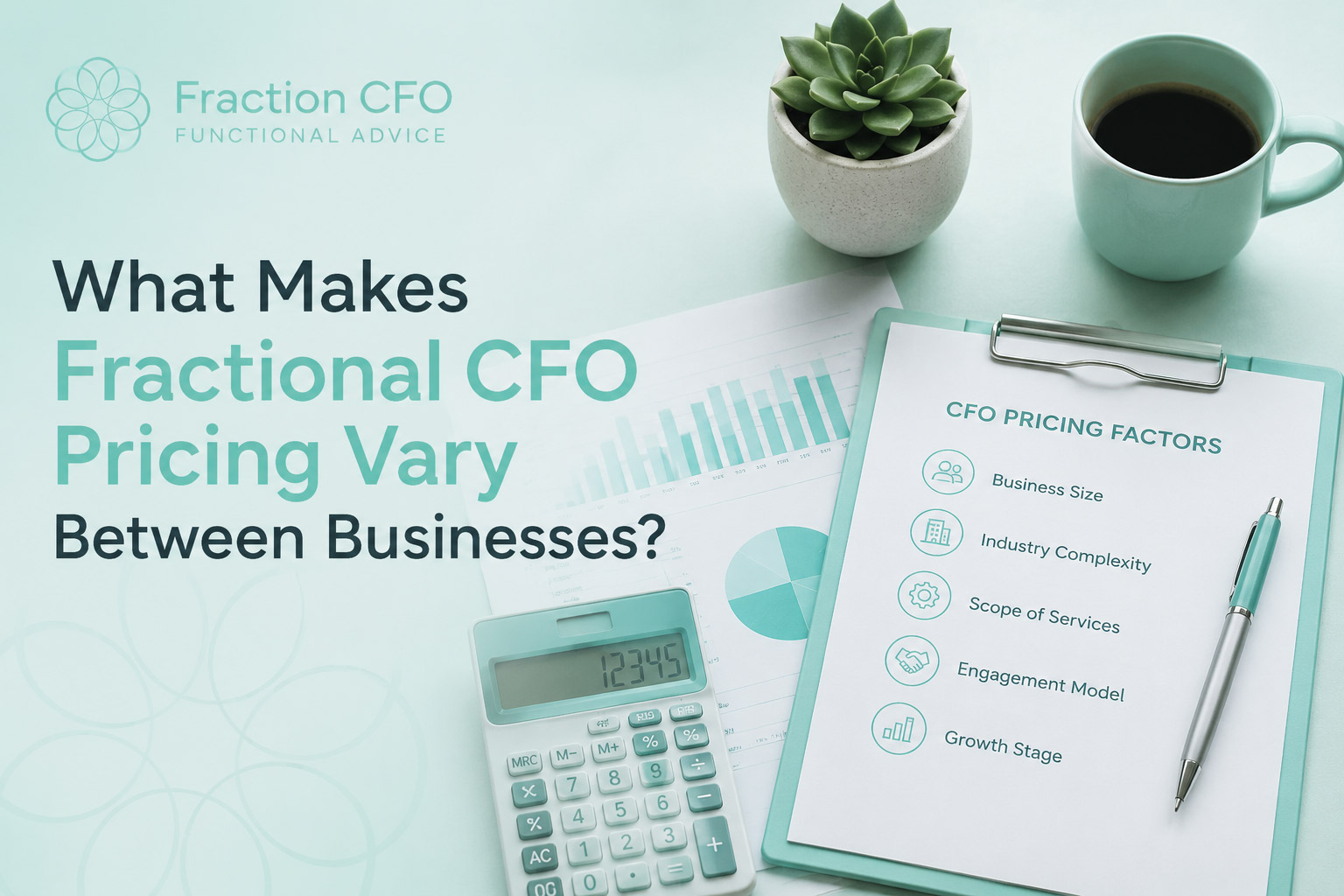
What Makes Fractional CFO Pricing Vary Between Businesses?
Introduction
A business owner comparing fractional CFO proposals will often notice something confusing almost immediately: pricing can vary dramatically between providers, even when the services sound similar at first glance.
One company may receive a modest monthly retainer for forecasting and reporting oversight, while another is quoted a far larger engagement for what appears to be the same role. The difference usually comes down to how much financial leadership the business actually needs behind the scenes.
Some companies need occasional strategic guidance. Others require ongoing operational involvement, investor preparation, cash flow stabilization, or department-level financial planning. The title may stay the same, but the scope changes significantly from one business to another.
Understanding what drives those pricing differences helps businesses evaluate fractional CFO services more realistically instead of treating them like interchangeable packages.
Fractional CFO Services Are Not One-Size-Fits-All
The term “fractional CFO” covers a wide range of financial responsibilities. In some businesses, the role is highly strategic and focused on long-term planning. In others, it becomes deeply operational and tied directly to daily financial decision-making.
That flexibility is one reason pricing varies so much.
A company with stable revenue and organized reporting may only need a few hours of monthly oversight. Another business with rapid growth, inconsistent cash flow, or investor reporting obligations may require weekly financial involvement across multiple departments.
The difference is not just time. It is the level of complexity, responsibility, and financial visibility required.
The Type of Business Often Shapes the Scope
Certain businesses naturally require more financial oversight than others because of how revenue flows through the company.
Companies With Predictable Revenue
Businesses with straightforward operations are generally easier to manage financially. A company offering recurring services with stable margins may only need periodic forecasting updates and financial review meetings.
In these situations, the CFO role often stays focused on:
Budget oversight
Cash flow forecasting
KPI reviews
Strategic planning discussions
Because the operational structure is simpler, the financial workload is usually lighter as well.
Businesses With Operational Complexity
Some industries create more moving financial variables, which increases the level of analysis required.
This commonly applies to:
A CFO working inside these environments typically spends more time building forecasts, analyzing trends, and helping leadership make operational decisions.
Growth Stage Changes Financial Demands
The financial priorities of a startup are very different from those of a mature company preparing for expansion or acquisition.
That evolution changes how fractional CFO services are structured.
Early-Stage Companies
In early growth phases, founders are usually focused on visibility and survival. They need to understand:
How long current cash reserves will last
When hiring becomes financially realistic
Whether pricing supports sustainable growth
How quickly expenses are increasing
At this stage, CFO support often revolves around runway planning and financial forecasting rather than complex operational management.
Scaling Businesses
As companies grow, financial oversight becomes more interconnected with operations.
Leadership teams may need help with:
Department budgeting
Margin analysis
Hiring projections
Expansion planning
Revenue forecasting
Performance reporting
The CFO role becomes more involved because financial decisions now affect multiple departments simultaneously.
Mature Organizations
Established businesses often bring in fractional CFO support during periods of transition rather than basic growth.
That may include:
Acquisition planning
Exit preparation
Debt restructuring
Operational restructuring
Profitability optimization
These projects tend to require deeper strategic analysis and broader leadership involvement.
Internal Financial Systems Can Increase or Reduce Costs
One of the largest hidden pricing factors is the condition of the company’s internal financial systems before the engagement even begins.
A business with organized records and reliable bookkeeping allows a fractional CFO to focus immediately on strategy. A business with inconsistent reporting may first require foundational financial cleanup.
That difference changes the workload significantly.
When Financial Infrastructure Is Strong
Businesses with healthy financial systems typically already have:
Accurate bookkeeping
Monthly reporting processes
Clear revenue tracking
Reliable expense categorization
Consistent reconciliations
In these situations, a fractional CFO can spend more time on planning and analysis instead of correcting historical issues.
When Financial Visibility Is Weak
Some companies enter CFO engagements without clear reporting systems in place. Leadership may not fully understand:
Profit margins
Cash position
Department performance
Revenue trends
Burn rate
Before strategic planning can happen, the financial foundation often needs to be stabilized first.
That additional setup work naturally increases the engagement scope.
The Level of Leadership Involvement Matters
Not every business expects the same degree of executive participation from a fractional CFO.
Some owners simply want occasional guidance. Others expect the CFO to function as an integrated leadership partner.
The more involved the role becomes operationally, the more pricing tends to increase.
Strategic Oversight Engagements
These arrangements are typically lighter in structure and focused on high-level review.
A CFO may:
Attend monthly meetings
Review forecasts
Analyze reports
Provide financial recommendations
Monitor business performance trends
This model works well for businesses that already have capable internal accounting support.
Embedded Financial Leadership
Other businesses need a much more active role.
In these situations, a fractional CFO may participate in:
Weekly leadership meetings
Investor discussions
Hiring decisions
Banking relationships
Department planning
Operational forecasting
The role starts functioning more like part-time executive leadership instead of external advisory support.
Why Investor-Focused Businesses Often Spend More
Businesses preparing for fundraising frequently require more advanced financial support than companies operating without outside capital pressure.
Investors usually expect detailed financial visibility before committing funds. That means businesses may need:
Multi-year forecasting models
KPI dashboards
Scenario planning
Cash runway projections
Revenue segmentation
Budget forecasting
Due diligence preparation
The process also tends to involve repeated revisions as investor questions evolve.
A company raising institutional capital may spend substantially more on CFO support than a business focused purely on internal operations because investor expectations increase the amount of financial preparation required.
Pricing Structures Can Vary Between Providers
Fractional CFO services are structured differently depending on the provider’s approach and the client’s operational needs.
Before comparing proposals, businesses should understand what type of arrangement they are actually reviewing.
Monthly Retainers
Retainers are commonly used when businesses need recurring support throughout the month.
This model often includes:
Ongoing forecasting
Financial reviews
Strategy meetings
Reporting oversight
The pricing usually reflects expected involvement levels rather than hourly usage alone.
Project-Based Engagements
Some companies only need temporary support for a specific initiative.
Examples include:
Fundraising preparation
Financial modeling
Budget development
Cash flow stabilization
Reporting system setup
These projects are usually priced around scope complexity and timeline requirements.
Hybrid Structures
Some firms combine recurring oversight with project-based financial work.
For example, a business may maintain monthly CFO support while separately engaging forecasting or investor preparation services during expansion periods.
Choosing Based on Price Alone Can Create Problems
Businesses sometimes compare fractional CFO services as if they were standardized accounting packages. That approach can create problems because financial leadership quality directly affects operational decision-making.
A lower-cost engagement may not provide enough strategic involvement to identify:
Cash flow risks
Margin pressure
Unsustainable growth assumptions
Forecasting inaccuracies
Operational inefficiencies
The result is that companies sometimes spend less upfront but make more expensive decisions later because financial planning lacked depth or consistency.
The goal should not simply be minimizing cost. It should be aligning financial leadership with the complexity of the business itself.
Frequently Asked Questions
How much does a fractional CFO usually cost?
Pricing varies depending on business size, operational complexity, financial systems, and the amount of strategic involvement required. Some businesses only need limited monthly advisory support, while others require deeper operational leadership.
Why do startups hire fractional CFOs?
Startups often need help with financial forecasting, investor reporting, fundraising preparation, and cash runway planning without hiring a full-time executive.
Can small businesses benefit from fractional CFO services?
Many small businesses use fractional CFO support to improve budgeting, profitability analysis, financial visibility, and long-term planning as the company grows.
What is the difference between a CFO and a fractional CFO?
A traditional CFO works full time within a business, while a fractional CFO provides executive-level financial guidance on a flexible or part-time basis.
When should a business consider hiring a fractional CFO?
Businesses often seek fractional CFO support during growth phases, financial uncertainty, expansion planning, fundraising preparation, or when leadership needs stronger financial direction.
Conclusion
Fractional CFO pricing varies because businesses themselves vary. Financial complexity, operational structure, growth stage, leadership expectations, and investor demands all influence how involved the role needs to become.
Some companies only require periodic strategic oversight, while others depend on ongoing financial leadership to support expansion, forecasting, and operational planning. The more integrated the financial role becomes within the business, the more the engagement structure changes.
For businesses evaluating financial strategy support, firms like Fraction CFO provide flexible CFO services designed around the actual needs of different companies rather than forcing businesses into rigid financial management models.

© 2025 All Rights Reserved | Fraction CFO